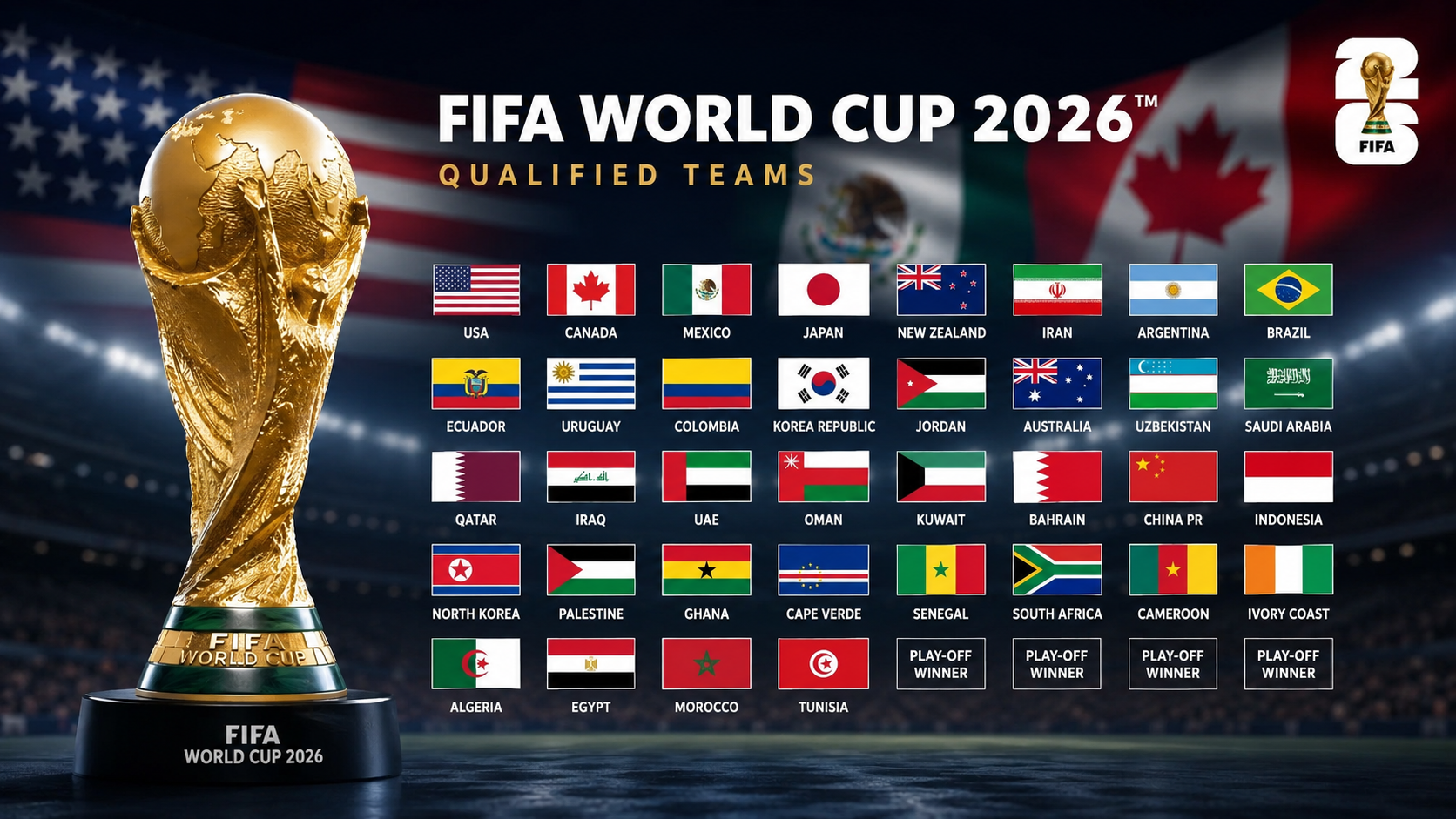
What makes this World Cup different is its size. For the first time, 48 national teams will compete for football's greatest prize, creating more opportunities for emerging nations and more excitement for fans. With 104 matches scheduled, the tournament promises nearly six weeks of nonstop action, drama, and unforgettable moments.
The competition will be played in 16 host cities, featuring some of the world's most impressive stadiums. Historic venues such as Mexico City's Estadio Azteca will share the spotlight with modern arenas in cities like Los Angeles, Dallas, Toronto, and New York. The final is expected to be one of the most watched sporting events in history.
Fans can also expect a new tournament format. Teams will be divided into 12 groups, with the best-performing nations advancing to an expanded knockout stage. This change increases the chances of surprise results and gives more countries the opportunity to make a deep run in the competition.
As qualification campaigns conclude, football giants such as Argentina, Brazil, France, Germany, and England are expected to be among the favorites. However, the expanded format could open the door for underdogs to make history and capture the world's attention.
Beyond the football, World Cup 2026 will be a global celebration. Millions of fans will travel across North America, while billions more follow the action through live broadcasts, social media, and digital platforms. From thrilling goals to emotional victories and heartbreaking defeats, every match will contribute to a story that unites the world through sport.
With more teams, more matches, and more countries involved than ever before, World Cup 2026 is not just another tournament—it is the beginning of a new era for football. Whether you're watching from Nairobi, New York, London, or Rio de Janeiro, one thing is certain: the road to football history is about to begin.