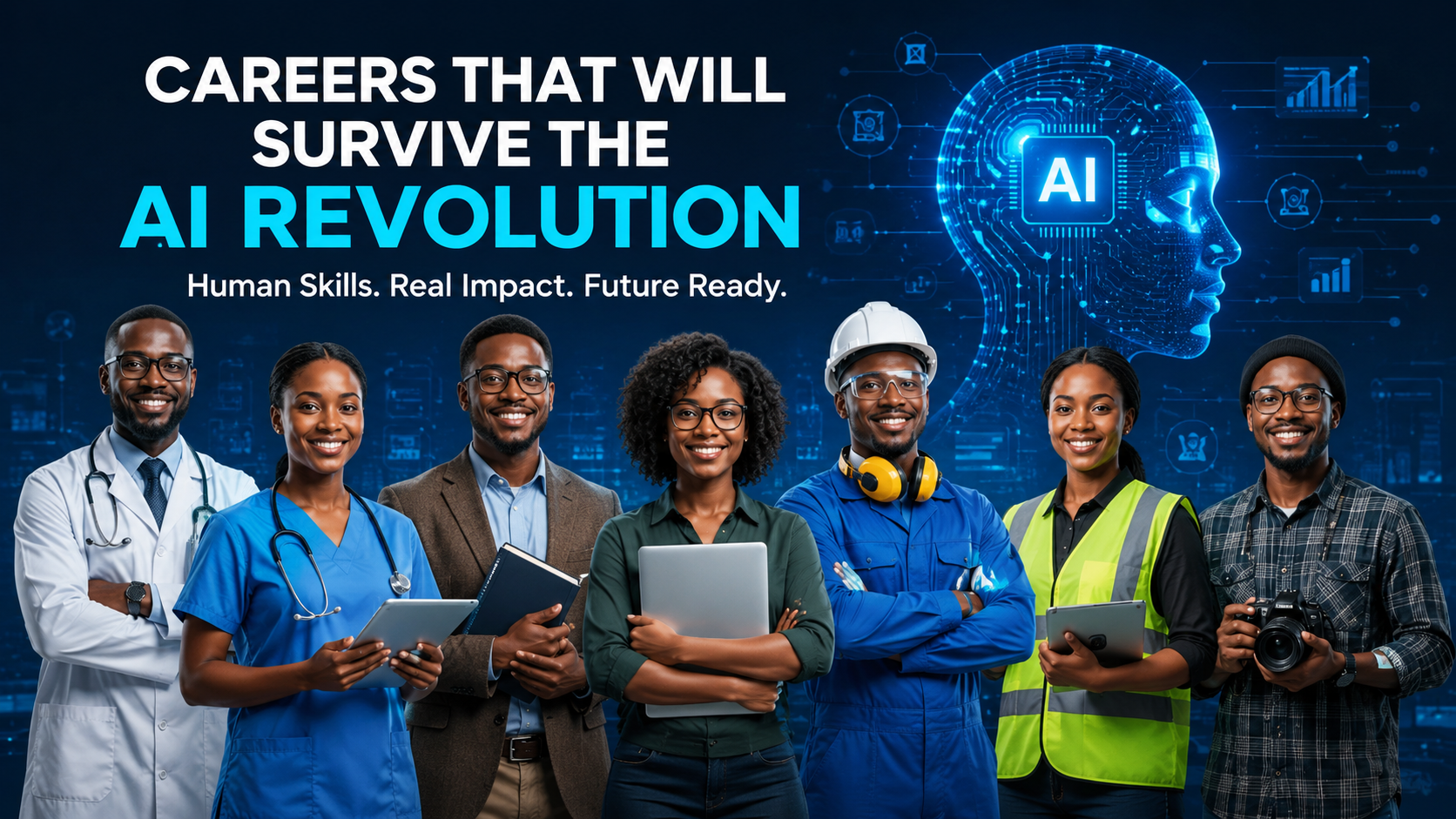
The future belongs to people who can work alongside AI rather than compete against it. Here are some careers that are likely to survive and thrive during the AI revolution.
1. Healthcare Professionals
Doctors, nurses, therapists, and other healthcare workers provide human care, empathy, and critical decision-making that AI cannot fully replace. While AI can assist with diagnoses and administrative tasks, patients still need trusted professionals to guide their treatment and provide emotional support.
2. Skilled Trades
Electricians, plumbers, carpenters, mechanics, and technicians perform hands-on work in constantly changing environments. These jobs require problem-solving, adaptability, and physical skills that remain difficult for AI and robots to replicate on a large scale.
3. Teachers and Educators
AI can help students learn, but great teachers do much more than deliver information. They inspire, mentor, motivate, and adapt lessons to individual learners. Education will continue to require human connection and leadership.
4. Creative Professionals
Writers, musicians, filmmakers, designers, and artists who bring originality and unique perspectives will continue to be valuable. AI can generate content, but human creativity, storytelling, and cultural understanding remain powerful advantages.
5. Entrepreneurs
Business owners identify opportunities, build relationships, and make strategic decisions in uncertain situations. AI can assist with operations, but entrepreneurship depends heavily on vision, leadership, and risk-taking.
6. Social Workers and Counselors
Careers focused on emotional support, mental well-being, and human relationships are difficult to automate. People often seek empathy, trust, and understanding from other people, not machines.
7. Cybersecurity Specialists
As technology advances, cybersecurity threats continue to grow. Organizations need experts who can protect systems, investigate attacks, and develop security strategies. Demand for cybersecurity professionals is expected to remain strong for years to come.
8. AI Specialists and Engineers
Ironically, some of the safest careers in the AI era are those that build and manage AI systems. AI engineers, machine learning specialists, data scientists, and AI consultants will continue to play a key role in developing future technologies.
9. Sales and Relationship Managers
Successful sales professionals build trust, negotiate deals, and understand customer needs. While AI can assist with data analysis and lead generation, human relationships remain at the heart of successful business development.
10. Leadership and Management Roles
Organizations still need leaders who can make complex decisions, manage teams, resolve conflicts, and create long-term strategies. Effective leadership requires emotional intelligence and judgment that go beyond algorithms.
How to Stay Relevant in the AI Era
The key to career success is continuous learning. Rather than fearing AI, professionals should learn how to use it as a tool. Skills such as critical thinking, communication, creativity, emotional intelligence, leadership, and adaptability will become even more valuable.
People who combine human strengths with technological skills will have the greatest opportunities in the future job market.
Final Thoughts
The AI revolution will change many industries, but it will not eliminate the need for human talent. Careers that depend on creativity, empathy, leadership, hands-on expertise, and complex decision-making are likely to remain strong.
Instead of asking whether AI will take your job, ask how you can use AI to become better at what you do. The future belongs to those who adapt, learn, and embrace change.